
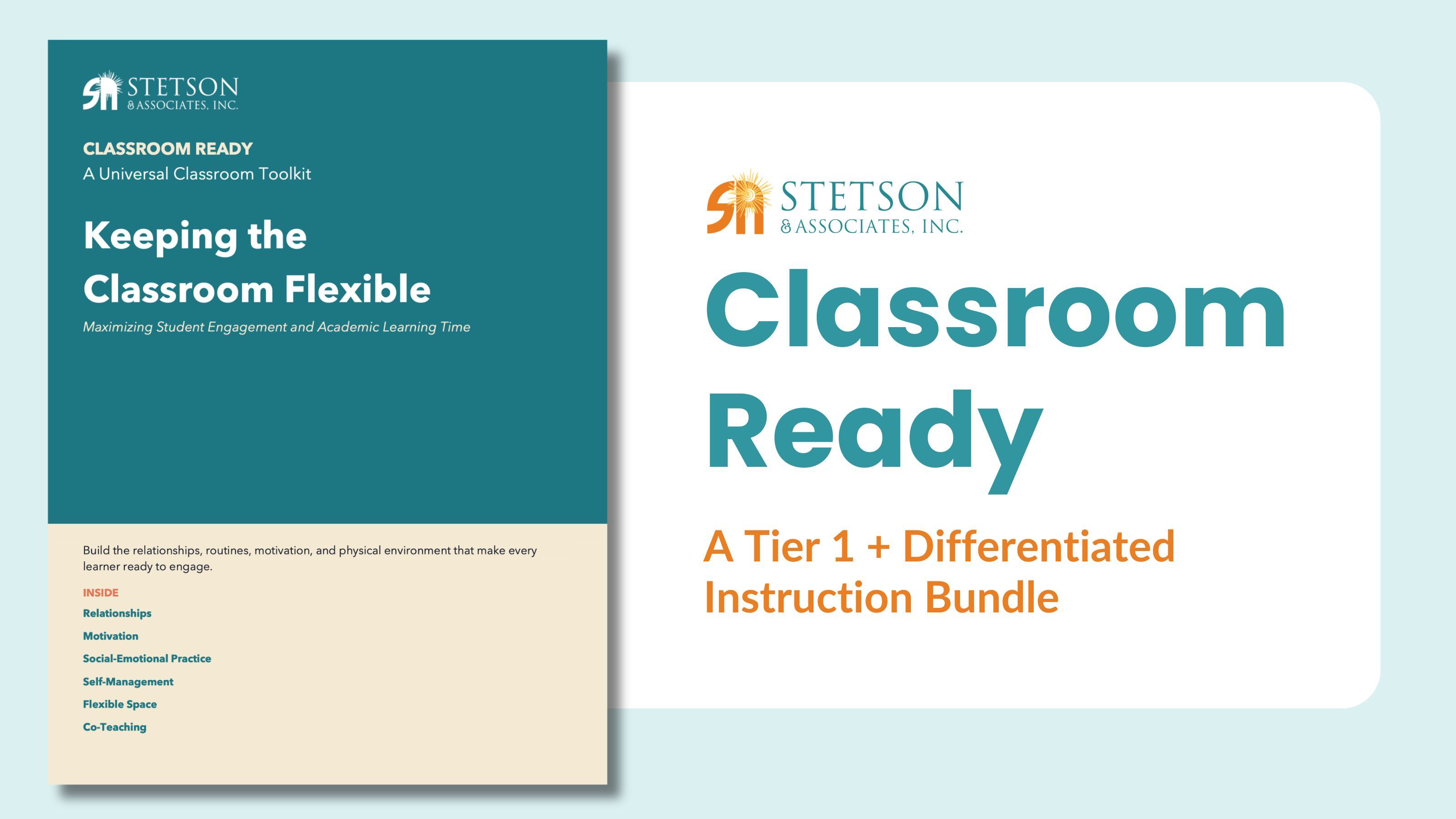
Keeping the Classroom Flexible
Maximizing Student Engagement and Academic Learning Time
The most effective classrooms are not rigid. They adapt to the lesson, the learners, and the moment.
Keeping the Classroom Flexible helps educators design learning environments that increase engagement, strengthen relationships, support self-management, and maximize academic learning time. Rather than treating classroom management, motivation, and physical space as separate challenges, this toolkit brings them together into a practical framework for creating classrooms that work for all learners.
Inside this toolkit, educators will explore:
- Student engagement and relationship-building
- Motivation styles and instructional matching
- Social-emotional practices that support learning
- Self-management and independence skills
- Flexible classroom layouts and physical environments
- Collaborative and co-teaching classroom structures
Grounded in current research on student engagement, motivation, social-emotional learning, and inclusive instructional practices, the toolkit provides educators with concrete strategies they can implement immediately in any classroom setting.
Teachers will learn how to:
- Build authentic relationships that increase student connection and participation
- Recognize and respond to different motivation styles
- Embed social-emotional supports throughout instruction rather than treating them as separate lessons
- Teach and support self-management skills that improve independence and reduce disruptions
- Design classroom spaces that support flexible grouping, collaboration, and differentiated instruction
- Create shared ownership of space and instruction within co-teaching partnerships
The toolkit includes:
- Classroom self-assessments and reflection tools
- Student motivation inventories
- Relationship-building checklists for students and families
- Self-management inventories and planning tools
- Flexible classroom layout examples and templates
- Co-teaching reflection rubrics
- Action-planning tools for individual teachers, co-teaching teams, and PLCs
Keeping the Classroom Flexible is designed for general education teachers, special educators, interventionists, instructional coaches, administrators, and co-teaching teams seeking practical ways to improve engagement and learning outcomes for all students.
Whether the challenge is uneven engagement, frequent behavior interruptions, ineffective room layouts, or unclear co-teaching roles, this toolkit provides practical solutions that help educators create classrooms where students are connected, engaged, and ready to learn.
