
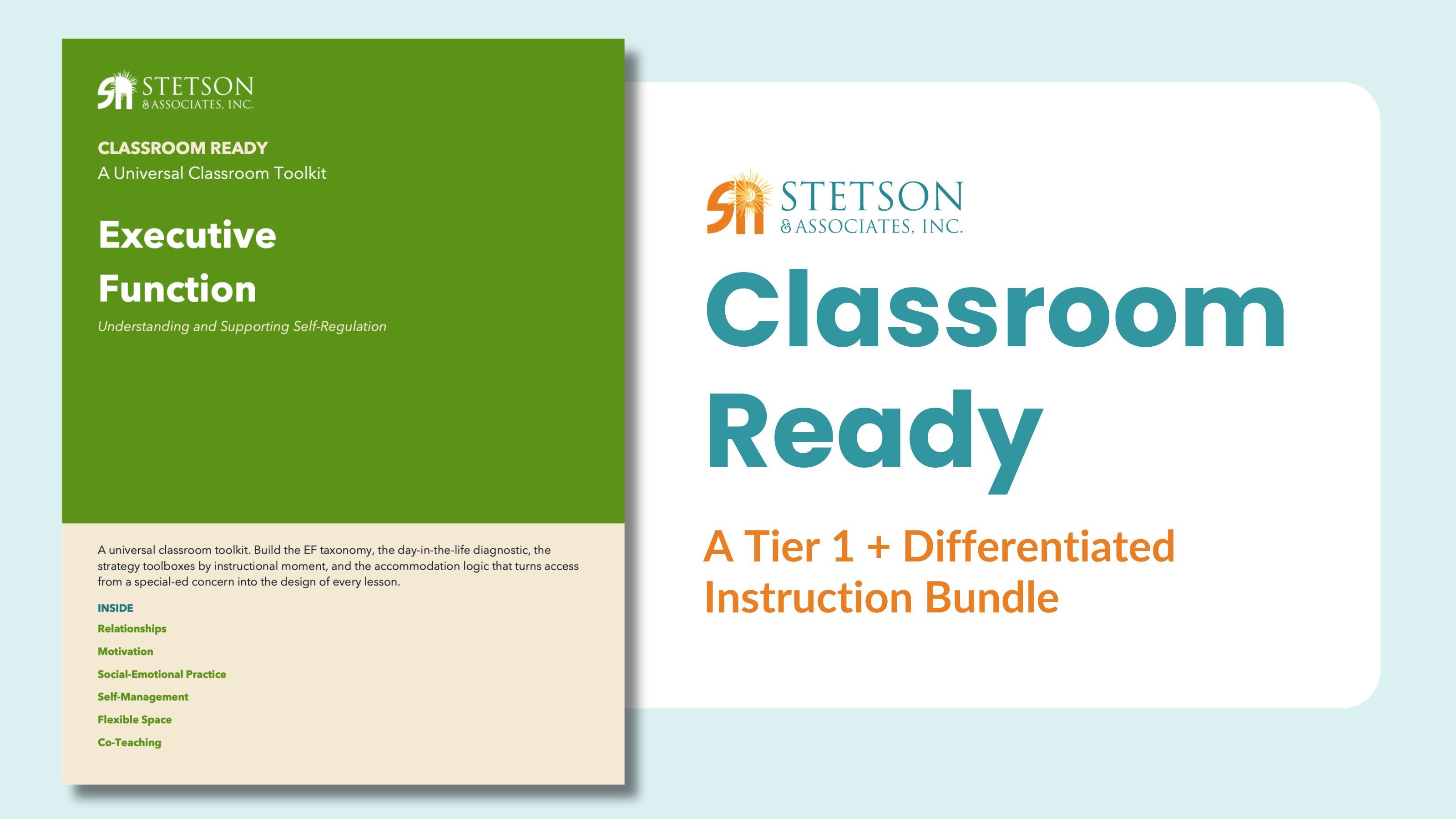
Executive Function: Understanding and Supporting Self-Regulation
Understanding executive function and building student independence.
Success in school depends on more than academic knowledge. Students are expected to manage materials, follow directions, organize assignments, sustain attention, regulate emotions, transition between activities, monitor their progress, and complete tasks independently. These are executive function demands, and they influence every aspect of learning.
Executive Function is a practical classroom toolkit that helps educators understand how executive function affects learning and translate research into everyday classroom practice. The toolkit focuses on helping teachers identify barriers, strengthen classroom supports, and build the conditions that promote student independence and success.
Rather than treating organization, time management, and self-regulation as skills students should already possess, this toolkit helps educators intentionally teach, scaffold, and support the executive function skills that allow students to access learning and demonstrate what they know.
Inside the toolkit, educators will explore:
- What executive function is and how it develops
- How executive function affects learning, behavior, and independence
- Common classroom indicators of executive function challenges
- The relationship between executive function, ADHD, and student development
- The three core areas of executive function
- The eight executive function skills observed in classroom settings
- The role of routines, structures, accommodations, and instructional supports in strengthening executive function skills
The toolkit includes practical resources such as:
- Executive function foundations and educator reference tools
- Classroom examples and student case studies
- Reflection activities and planning templates
- Strategy menus organized by common classroom barriers
- Accommodations decision-making tools
- Accommodation fidelity and implementation reviews
- Team action planning tools
- Self-assessments for teachers and teams
- Six-week implementation and reflection tools for PLCs and instructional teams
Educators will learn how to:
- Identify executive function barriers that interfere with learning
- Distinguish between skill deficits and motivation assumptions
- Support planning, organization, time management, and task initiation
- Strengthen working memory and self-monitoring during instruction
- Build predictable classroom structures that reduce cognitive load
- Use accommodations and technology supports effectively
- Create classroom environments that promote independence and self-regulation
- Match supports to student needs while maintaining high expectations for learning
The toolkit addresses eight essential executive function skills:
- Inhibition
- Cognitive flexibility
- Emotional control
- Task initiation
- Working memory
- Planning and organization
- Organization of materials
- Self-monitoring
The toolkit is designed for:
- General education teachers
- Special education teachers
- Instructional coaches
- Campus administrators
- Interventionists and support staff
- Co-teaching teams
- PLCs and collaborative teaching teams
Whether supporting students with disabilities, students experiencing stress or interrupted learning, or simply the growing executive function demands placed on today's learners, Executive Function provides practical tools for creating classrooms where students can build independence, strengthen self-management skills, and successfully access rigorous instruction.
