
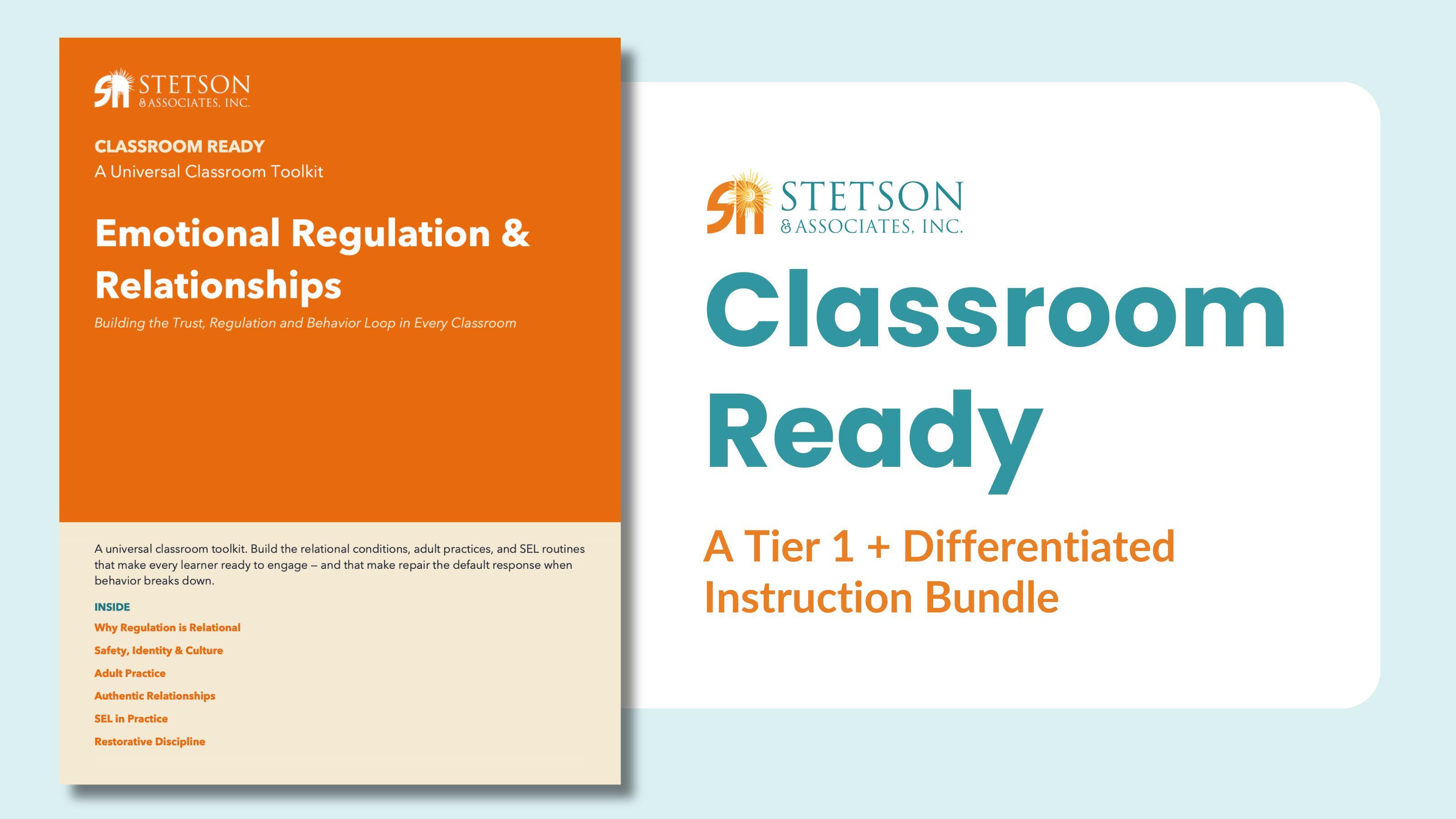
Emotional Regulation and Relationships
Building the Trust, Regulation, and Behavior Loop in Every Classroom
Behavior does not happen in isolation. Student engagement, participation, and behavior are shaped by relationships, classroom culture, emotional safety, and the experiences students bring with them each day.
Emotional Regulation & Relationships helps educators move beyond managing behavior to understanding it, teaching the skills that support self-regulation, and creating classroom environments where students feel connected, respected, and ready to learn. Rather than relying primarily on consequences or compliance, this toolkit focuses on the conditions that help students succeed in the first place.
Inside the toolkit, educators explore the relationship between emotional regulation, classroom culture, adult practice, and student success through practical strategies that can be implemented immediately in any classroom setting.
Topics include:
- Understanding emotional regulation and why it is a teachable skill
- The relationship between brain development, stress, and behavior
- Building classrooms where students experience safety, belonging, and trust
- Supporting neurodiverse learners through multiple pathways for regulation
- Strengthening educator practices that influence classroom climate
- Building positive relationships with students and families
- Embedding social-emotional learning into daily instruction
- Responding to behavior through accountability, repair, and problem-solving rather than punishment
The toolkit includes practical resources such as:
- Reflection and self-assessment tools
- Classroom culture and belonging indicators
- Adult practice and co-regulation checklists
- Student interest survey templates
- Family partnership reflection tools
- Action planning templates for individuals, co-teaching teams, and PLCs
- Strategies for teaching self-regulation and emotional awareness
- Frameworks for restorative conversations and relationship repair
Educators will learn how to:
- Recognize early signs of dysregulation before behavior escalates
- Create predictable routines that support emotional safety
- Use co-regulation practices to help students return to learning
- Build stronger partnerships with students and families
- Increase student ownership, voice, and engagement
- Teach emotional regulation as intentionally as academic skills
- Respond to mistakes and conflict in ways that preserve dignity and strengthen relationships
The toolkit is designed for:
- General education teachers
- Special education teachers
- Instructional coaches
- Campus administrators
- Counselors and support staff
- Co-teaching teams and PLCs
Whether used independently, with a coach, or as part of a professional learning community, Emotional Regulation & Relationships provides educators with practical tools for creating classrooms where students feel safe enough to learn, connected enough to participate, and supported enough to grow.
