
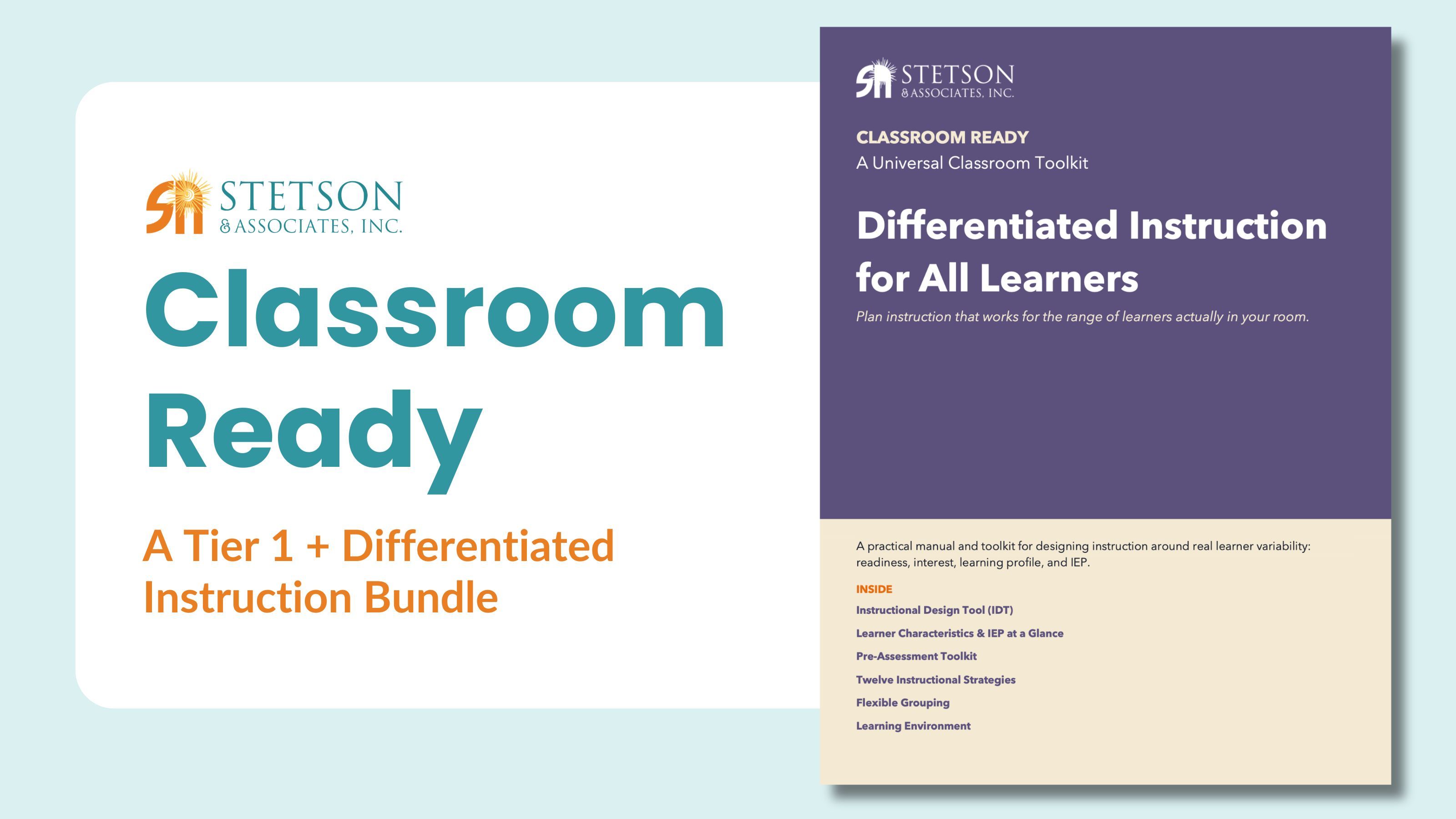
Differentiated Instruction for All Learners
Practical tools for planning instruction around the learners actually in your room.
Today's classrooms include learners with different readiness levels, interests, learning profiles, languages, strengths, and support needs. Effective instruction begins by acknowledging that variability and designing learning experiences that provide multiple pathways to success.
Differentiated Instruction for All Learners provides educators with practical, classroom-tested tools for moving beyond one-size-fits-all instruction and planning lessons that work for the full range of learners they serve each day.
Rather than presenting differentiation as a separate initiative or an overwhelming planning process, this toolkit offers simple frameworks and decision-making tools that help teachers incorporate differentiation into the instructional planning they already do.
Inside the toolkit, educators will explore:
- The core principles of differentiated instruction
- Planning for readiness, interests, learning profiles, and IEP needs
- Using pre-assessment to identify appropriate starting points for instruction
- Designing instruction that adjusts content, process, product, and learning environment
- Building flexible grouping structures that respond to changing student needs
- Creating classroom routines and systems that support active, differentiated learning environments
- Embedding accommodations and supports into everyday instructional planning
The toolkit includes practical resources such as:
- The Instructional Design Tool (IDT) planning framework
- IEP at a Glance planning templates
- Student profile and learner characteristic tools
- Student roster and grouping templates
- A toolkit of fifteen pre-assessment strategies
- Twelve research-based instructional strategies
- Flexible grouping planning tools
- Classroom management and routine checklists
- Process skills and self-assessment tools for teams and PLCs
Educators will learn how to:
- Identify the learner variability already present in their classrooms
- Match instructional strategies to student needs and instructional goals
- Use pre-assessment data to guide planning decisions
- Design multiple pathways for students to access content and demonstrate learning
- Move beyond whole-group instruction to purposeful, flexible grouping
- Increase engagement, participation, and academic growth for all learners
- Integrate accommodations and supports naturally into instructional design
The toolkit is designed for:
- General education teachers
- Special education teachers
- Instructional coaches
- Campus administrators
- Co-teaching teams
- PLCs and collaborative teaching teams
Whether used by an individual teacher, a co-teaching team, or an entire campus, Differentiated Instruction for All Learners provides practical tools for building classrooms where rigor, access, and meaningful participation are available to every student.
