
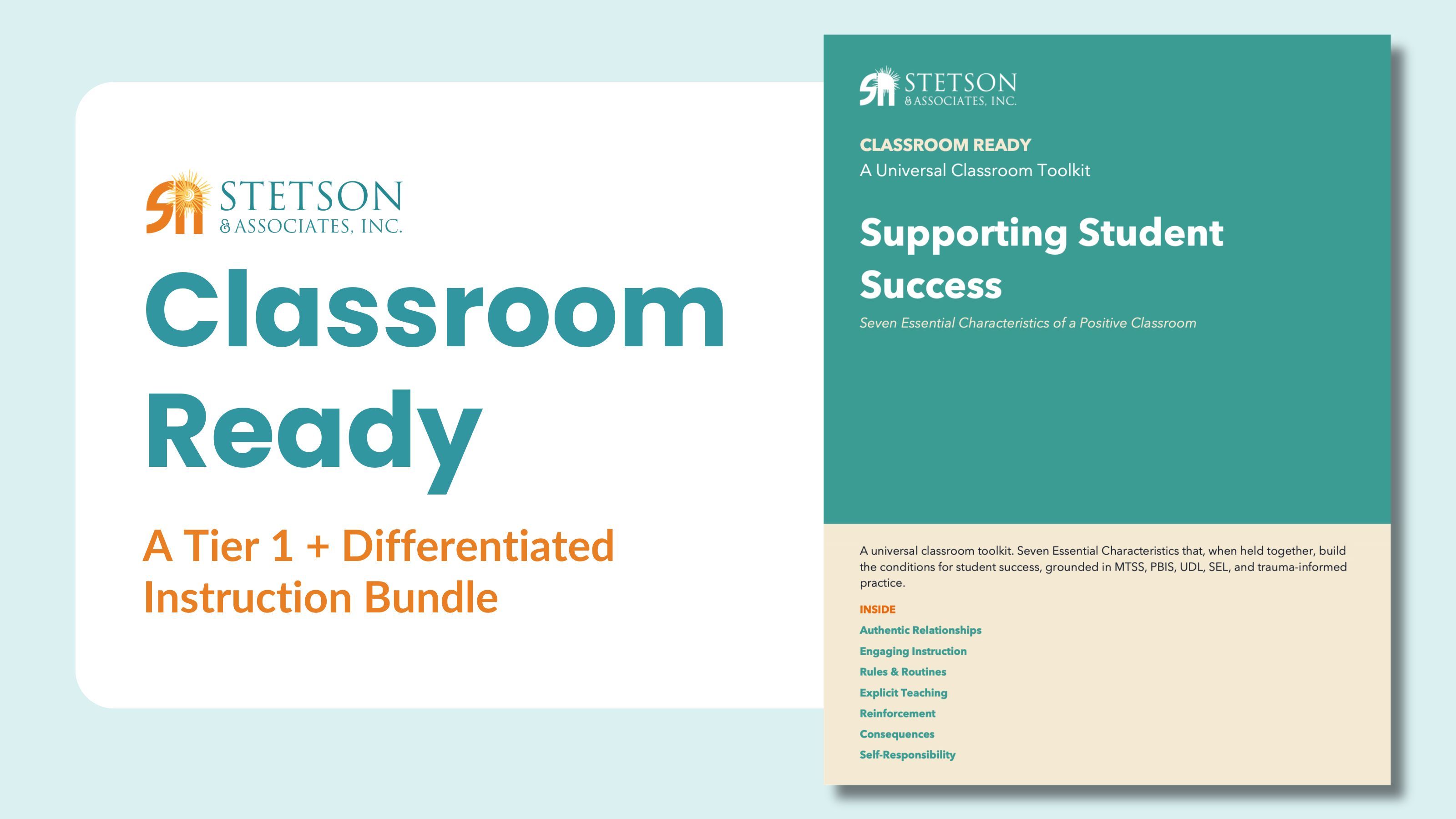
Supporting Student Success
Seven Essential Characteristics of a Positive Classroom
Every educator wants classrooms where students feel connected, engaged, responsible, and successful. The challenge is not knowing that these conditions matter. The challenge is knowing where to start and what to do next.
Supporting Student Success provides educators with a practical framework for building positive classroom environments that support academic achievement, behavior, relationships, and student independence. Organized around seven Essential Characteristics of effective classrooms, this toolkit helps teachers strengthen the practices that create the conditions for learning for every student.
Inside this toolkit, educators will explore:
- Authentic Relationships
- Engaging Instruction
- Rules and Routines
- Explicit Teaching
- Reinforcement
- Consequences
- Self-Responsibility
The strategies and tools are grounded in current research and align with Multi-Tiered Systems of Support (MTSS), Positive Behavioral Interventions and Supports (PBIS), Universal Design for Learning (UDL), social-emotional learning (SEL), and trauma-informed practices.
Unlike programs that focus only on behavior management, Supporting Student Success focuses on the classroom systems, instructional practices, and relationships that influence whether students are ready and able to learn. Teachers learn how to increase engagement, strengthen routines, respond consistently to behavior, and build student ownership of learning and behavior over time.
The toolkit includes:
- Practical classroom strategies that can be implemented immediately
- Self-assessments and reflection tools
- Student interest and engagement inventories
- Classroom checklists and planning templates
- Strategy banks organized by student need
- Tools to support self-management and student responsibility
- Resources for individual teachers, coaching conversations, and PLC discussions
Supporting Student Success is designed for general education teachers, special education teachers, interventionists, instructional coaches, administrators, and school leadership teams seeking a shared framework for creating positive, effective learning environments.
Whether used by an individual educator, a coaching partnership, or an entire PLC, this resource helps schools move beyond reactive approaches and toward classrooms where students feel known, capable, and supported to succeed.
